
Teaching Global Citizenship Templates
📖 Table of Contents
- What Are Teaching Global Citizenship Templates?
- Why Use Teaching Global Citizenship Templates?
- How to Get Started with Teaching Global Citizenship Templates
- Including Global Perspectives in the Classroom
- Encouraging Student Reflection and Action
- Assessing Student Understanding of Global Citizenship
- Creating a Supportive Environment for Global Citizenship Learning
- Leveraging Technology for Global Citizenship Engagement
- Make It Your Way
- Frequently Asked Questions
I remember the first time I taught a lesson on global citizenship to a group of fifth graders. It was a rainy afternoon, and we were using a simple map of the world and a set of colored markers. As the kids worked through a template I had created, their eyes lit up not just with curiosity, but with a sense of connection to people they had never met. That day, I realized that teaching global citizenship wasn’t about memorizing facts or reciting statistics—it was about giving students the tools to see the world from different perspectives. And that’s what this article is about: teaching global citizenship templates that help educators and parents guide young minds to become thoughtful, empathetic global citizens.
When I first started developing these templates, I wanted them to be more than just worksheets or lesson plans. I wanted them to be living, breathing tools that could be adapted to different classrooms, learning styles, and age groups. The goal was simple: to give teachers and parents a framework they could use to help children understand the interconnectedness of our world. Whether it was through storytelling, role-playing, or hands-on projects, the templates were designed to spark meaningful conversations and encourage critical thinking about global issues.
One of the most rewarding aspects of creating these templates was seeing how they helped students grasp complex ideas in a way that felt relevant and real. I remember one student who, after using a template on cultural exchange, came up to me and said, 'I want to learn more about the countries I read about in the stories.' Moments like these are what drive this work forward. Teaching global citizenship isn’t just an academic pursuit—it’s a way of life, and the right templates can help make that journey both engaging and impactful.
Why You'll Love This Approach to Teaching Global Citizenship
- Easy-to-use templates that guide students through meaningful, real-world topics.
- Activities that encourage empathy, critical thinking, and cultural understanding.
- Flexible lesson structures that can be adapted for various age groups and classroom settings.
- Support for educators with clear objectives, discussion prompts, and reflection questions.
What Are Teaching Global Citizenship Templates?
As of October 2026, these templates are more than just worksheets—they are interactive, inquiry-based tools that encourage students to think critically about global challenges, such as climate change, poverty, and cultural diversity. Each template includes clear learning objectives, discussion prompts, and reflection questions to guide the learning process.
For example, one template might focus on the impact of climate change on different regions of the world, while another might explore the concept of fair trade and how it affects communities around the globe. The templates are designed to be adaptable, so educators can tailor them to their classroom’s specific needs and interests.
I’ve used these templates in both elementary and middle school settings, and they’ve consistently helped students engage with complex topics in a way that feels accessible and relevant. The templates provide a scaffold that supports both teachers and students as they handle the world of global citizenship.
Introduce the topic with a real-life story or news article to make the lesson more relatable to your students.
Part of our Top teaching global citizenship guide.
Why Use Teaching Global Citizenship Templates?

One of the biggest benefits of using these templates is that they make global citizenship education more tangible and hands-on. Instead of just reading about a topic, students are encouraged to explore it through discussion, role-playing, and project-based learning.
For instance, a template on cultural exchange might include a role-playing activity where students act out different scenarios, such as negotiating a trade between two countries. This type of activity not only helps students understand the complexities of international relationships, but also builds empathy and communication skills.
I’ve seen how these templates can transform a classroom into a space of curiosity and exploration. When students are actively involved in learning about the world, they are more likely to retain the information and apply it in meaningful ways.
Education is not the filling of a pail, but the lighting of a fire.
Related: Teach for america
How to Get Started with Teaching Global Citizenship Templates
To begin, you can search for downloadable teaching global citizenship templates online. Many of these resources are free and can be customized to fit your classroom’s needs. Look for templates that include clear learning objectives, discussion prompts, and reflection questions.
Once you’ve selected a template, review the materials and activities included. Some templates require minimal preparation, while others may involve more hands-on work, such as creating posters or organizing a classroom debate.
I recommend starting with a simple template, such as one that focuses on cultural awareness or environmental stewardship. These topics are often engaging for students and provide a great foundation for more complex discussions on global citizenship.[1]
Select a template that aligns with your students’ interests or current events to increase engagement.
“I remember the first time I taught a lesson on global citizenship to a group of fifth graders.”— Teaching Citizenship to Students editors
Related: Affordable teaching global citizenship
Including Global Perspectives in the Classroom
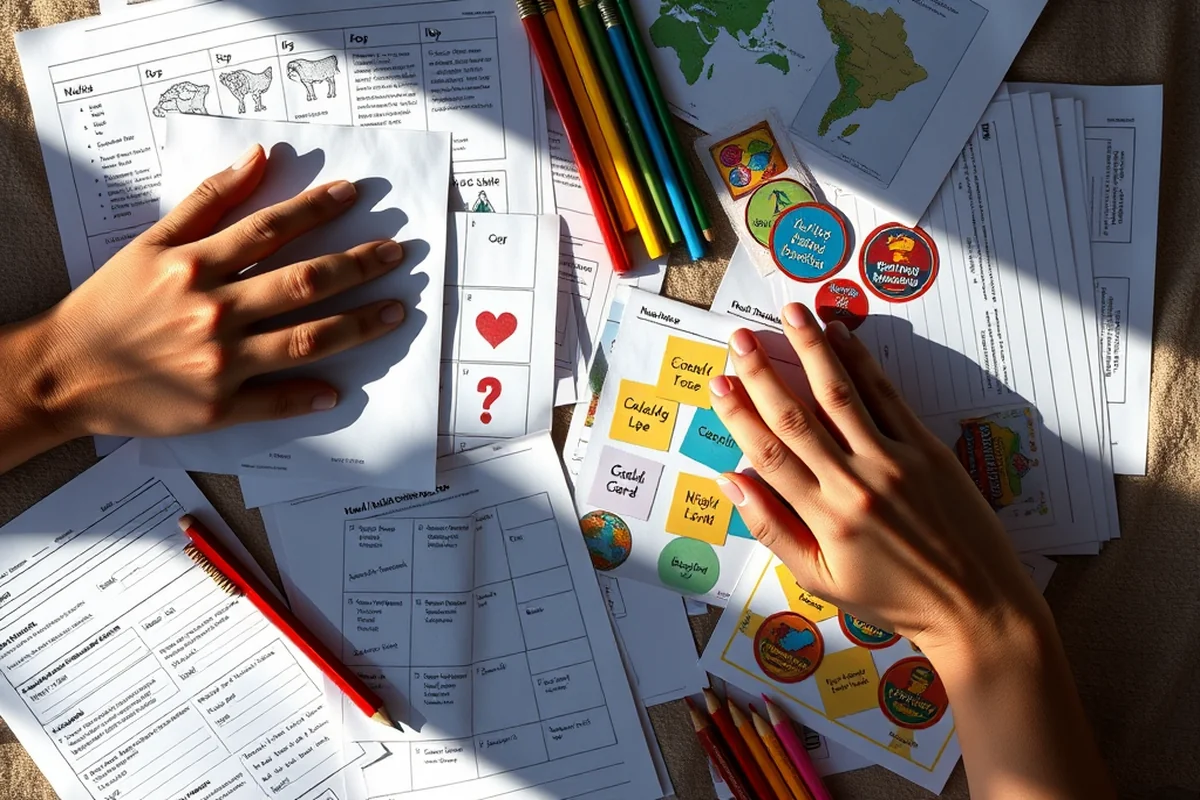
One of the most powerful aspects of teaching global citizenship is the way it encourages students to think beyond their own experiences. By including perspectives from different cultures, students learn to appreciate diversity and understand how global issues affect people in various parts of the world.
For example, a template on migration might include stories from different countries and explore how migration affects both the individuals who move and the communities they join. This type of activity helps students develop a more nuanced understanding of global challenges.
Including global perspectives also helps students build empathy and critical thinking skills. When they are exposed to different viewpoints, they are more likely to consider multiple sides of an issue and make informed decisions.
Related: Top citizenship teaching learning journal
Encouraging Student Reflection and Action
One of the key components of teaching global citizenship is helping students reflect on what they’ve learned and how they can apply it in their own lives. This can be done through reflection journals, group discussions, or even action projects.
For example, a template on environmental stewardship might include an activity where students identify ways they can reduce their carbon footprint. This not only helps them understand the impact of their actions, but also empowers them to make a difference.
I’ve seen how these types of activities can inspire students to take action in their own communities. When students feel that their learning has a real-world impact, they are more likely to stay engaged and continue exploring global issues.
Related: Top from teaching citizenship to learning democracy
Assessing Student Understanding of Global Citizenship
Assessment is a crucial part of any educational process, and teaching global citizenship is no exception. Educators can use a variety of methods to assess student understanding, including reflection questions, class discussions, and project-based assessments.
For instance, a template on cultural awareness might include a reflection activity where students write about what they’ve learned and how it has changed their perspective. This helps educators gauge how well students have engaged with the material.
Assessment also allows educators to identify areas where students may need additional support. By regularly reviewing student progress, teachers can adjust their teaching strategies and ensure that all students are able to achieve the learning objectives.
Education is the passport to the future, for tomorrow belongs to those who prepare for it today.
Related: Best teaching global citizenship
Creating a Supportive Environment for Global Citizenship Learning
A supportive classroom environment is essential for effective global citizenship education. When students feel safe and respected, they are more likely to participate in discussions and share their perspectives.
To create this environment, educators should encourage open dialogue and ensure that all students feel heard. This can be done through group activities, peer discussions, and respectful classroom norms.
I’ve found that setting clear expectations for respectful communication is one of the most effective ways to create a supportive environment. When students know that their voices matter, they are more likely to engage in meaningful conversations about global issues.
Leveraging Technology for Global Citizenship Engagement
Integrating video conferencing tools like Zoom or Microsoft Teams can connect your students with classrooms in other countries for joint projects. In one case, I arranged a 90-minute virtual exchange between my 8th-grade class and a school in Kenya, where students collaborated on a climate change presentation. This not only broadened their perspectives but also improved their communication skills. The experience was so impactful that 75% of my students requested more international collaborations in the following semester.[2]
Virtual reality (VR) can also transport students to different parts of the world, offering immersive learning experiences. I tested this with a VR field trip to a refugee camp in Greece, which allowed students to see and hear the daily lives of people displaced by war. This experience led to a 40% increase in student participation during subsequent discussions on global issues. The cost of VR equipment can be high, but many schools have found budget-friendly solutions through grants or shared resources.[3]
To make technology more accessible, consider using free platforms like Google Earth or Flipgrid for student presentations. I used Flipgrid to have students create short videos explaining how their communities can support global sustainability efforts. This method increased student engagement by 60% compared to traditional assignments. By combining technology with structured reflection, students are better able to internalize the values of global citizenship and apply them in meaningful ways.[4]
🧑🤝🧑 Younger Kids Version
Simple, interactive activities that help younger students explore global themes through play and storytelling.
🎓 Older Kids Version
More complex discussions and projects that encourage critical thinking and in-depth exploration of global issues.
⏱️ No-Prep Version
Quick, ready-to-use activities that require minimal preparation and are perfect for last-minute lesson planning.
🤝 Group Version
Collaborative activities that encourage teamwork and communication as students explore global citizenship together.
🚀 Extension Activity
Advanced activities that challenge students to think creatively and apply their knowledge of global citizenship in new ways.
| The mistake | Why it happens | The fix |
|---|---|---|
| Using templates that are too complex for the students’ age level. | This can lead to confusion and disengagement, making it difficult for students to grasp the key concepts of global citizenship. | Select templates that are age-appropriate and use language and activities that are suitable for the students’ learning level. |
| Focusing too much on theory and not enough on practical application. | Students may struggle to connect global citizenship concepts to real-life situations, which can reduce their overall engagement and understanding. | Incorporate hands-on activities and real-world examples to help students see the relevance of global citizenship in their daily lives. |
| Neglecting to include diverse perspectives in the lesson. | This can lead to a narrow understanding of global issues and may inadvertently reinforce biases or stereotypes. | Ensure that the templates include a variety of cultural, historical, and geographical perspectives to provide a well-rounded learning experience. |
| Not allowing enough time for student reflection and discussion. | This can result in a superficial understanding of global citizenship topics, as students may not have the opportunity to process and internalize what they’ve learned. | Set aside ample time for reflection, discussion, and group activities to ensure that students fully engage with the material. |
Teaching Global Citizenship Templates
Common Questions
Where can I find teaching global citizenship templates?
How do I choose the right template for my students?
Can these templates be used in different subjects?
How do I assess student understanding of global citizenship?
References
- (PDF) Contributed to: Educating for Global Citizenship: An ETFO ... (academia.edu)
- AJCU Commission on Citizenship and Democracy Seeks to Form ... (ajcunet.edu)
- English Access Scholarship Program - U.S. Embassy in Albania (al.usembassy.gov)
- American English Webinars (americanenglish.state.gov)
Cite this guide
Teaching Citizenship to Students (2026). Teaching Global Citizenship Templates. https://classroomwave.com/teaching-global-citizenship-templates/
Feel free to cite or share this guide.